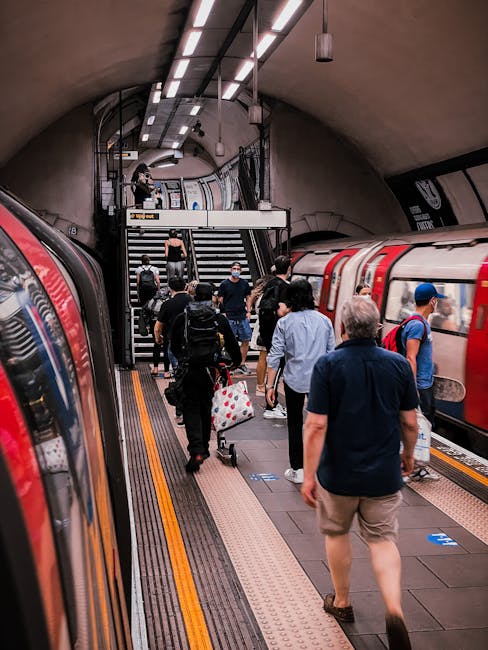
Moving near Woodford Tube Station? Local removal checklist
Moving near Woodford Tube Station can feel straightforward on a map and surprisingly fiddly on the day. Busy roads, tight driveways, flats above shops, parking limits, and that awkward last box at the wrong end of a narrow hallway can all turn a simple move into a bit of a scramble. A good local removal checklist keeps the whole thing calm.
This guide is designed for people moving in or around Woodford Green, whether you are heading into a flat near the station, relocating a family home a few streets away, or planning a same-day move with a van booked tight to the clock. You will find a practical checklist, local planning tips, common mistakes to avoid, and a few sensible links to deeper advice if you want to prepare properly rather than wing it. Truth be told, that usually saves time, stress, and a few bruises too.
Table of Contents
- Why Moving near Woodford Tube Station? Local removal checklist Matters
- How Moving near Woodford Tube Station? Local removal checklist Works
- Key Benefits and Practical Advantages
- Who This Is For and When It Makes Sense
- Step-by-Step Guidance
- Expert Tips for Better Results
- Common Mistakes to Avoid
- Tools, Resources and Recommendations
- Law, Compliance, Standards, or Best Practice
- Options, Methods, or Comparison Table
- Case Study or Real-World Example
- Practical Checklist
- Conclusion
- Frequently Asked Questions
Why Moving near Woodford Tube Station? Local removal checklist Matters
Moving close to Woodford Tube Station is not quite the same as moving in a quieter suburban cul-de-sac. You are often dealing with a mix of residential streets, commuter traffic, limited roadside space, and properties that may have shared entrances or awkward stair access. That means a local removal checklist is more than a nice extra. It is the difference between a move that flows and one that keeps tripping over small problems.
Local moves tend to fail for boring reasons. The sofa does not fit the lift. The van has nowhere sensible to pause. The key handover is happening before the boxes are ready. A checklist helps you catch those details early, while there is still time to fix them. And in our experience, that is where most of the stress disappears.
It also matters because moving in a station area can affect other people around you. Neighbours may need access, there may be delivery windows to work around, and your removal team may need a clean route from the property to the vehicle. A little planning goes a long way. It really does.
How Moving near Woodford Tube Station? Local removal checklist Works
The simplest way to think about this checklist is in phases: before move day, on move day, and after the van leaves. Each phase has its own job. If you handle them one by one, the move feels more controlled and less like a race.
Before move day, you confirm the basics: dates, access, parking, packing, and what is being taken. This is also when you declutter, book any extra help, and protect furniture or fragile items. If you want a deeper guide on what to keep and what to let go, this decluttering advice before moving is a useful companion.
On move day, the checklist becomes more practical. Are boxes labelled? Is the route clear? Are fragile items separated? Do you have keys, meter readings, and documents ready? Small things, but they make a big difference when people are carrying bulky furniture down stairs.
After the move, the checklist helps you settle in. You check for damage, unpack essentials first, and make sure utilities, broadband, and any building access arrangements are working as expected. The move is not really over until the last practical detail is done.
Key Benefits and Practical Advantages
A strong local removal checklist offers more than peace of mind. It improves timing, reduces breakages, and helps you use your van space properly. Near Woodford Tube Station, where access can be a bit tighter than you hoped, those gains are noticeable.
- Less delay on move day: fewer surprises means fewer pauses.
- Safer lifting and loading: when heavy items are prepared in advance, handling is easier.
- Better parking and access planning: especially useful near busy roads and mixed-use streets.
- Lower risk of forgotten essentials: documents, chargers, toiletries, and kettle stuff somehow vanish if not listed.
- Cleaner unpacking: labelled boxes make the first evening less chaotic.
There is also a money angle, although it is usually indirect. If the move is quicker and smoother, you are less likely to pay for unnecessary extra time. If you are comparing service levels, the overview on removal services in Woodford Green is a sensible place to understand what different options might cover.
And let's be honest: a checklist makes the process feel less personal in the wrong way. You are not relying on memory at 6:45 in the morning while half a wardrobe is in the hallway. That alone is worth something.
Who This Is For and When It Makes Sense
This checklist is useful for almost anyone moving near Woodford Tube Station, but it is especially handy if your property has limited access, you are moving from a flat, or you are on a tight deadline. Students, first-time renters, families, and office movers can all benefit from the same basic structure, with a few tweaks.
If you live in a flat, you may need to think about lifts, stairs, building rules, and shared entrances. The local guide for flat removals in Woodford Green can help if you are dealing with upper floors or a compact apartment layout. If you are moving into or out of a house, the timing is often less constrained, but furniture volume can make the day feel bigger than expected.
For students, timing often matters more than volume. Term dates, short notice, and a few heavy boxes of books can create a strange little logistical puzzle. If that sounds familiar, student removals in Woodford Green may be more relevant than a broad house-moving guide.
This checklist also makes sense if you are moving items into storage, shifting offices, or handling one awkward object, like a piano or very large sofa. Different move, same need for planning. Different weight, same back pain if you are careless. Slightly grim, but true.
Step-by-Step Guidance
Below is a practical move checklist tailored to a local move near the station. Keep it simple. The trick is not doing everything at once; it is doing the right things in the right order.
1. Confirm your moving date and access details
Start with the date, arrival window, and building access. If there is a concierge, shared entrance, coded gate, or permit issue, sort that early. Ask yourself: where will the van stop, and how far is the carry from front door to vehicle? On a wet London morning, a few extra metres can feel like a mile.
2. Walk the route from room to van
Do a quick walkthrough with a practical eye. Look for narrow turns, low ceilings, door handles that snag, or furniture that may need to be disassembled. If you have to twist a sofa around a stairwell, that is not the moment to discover the hallway is too tight.
3. Sort, donate, and reduce volume
The less you move, the easier everything becomes. Be firm with duplicate kitchenware, old books, and furniture you no longer like. A bit ruthless, but in a good way. For a deeper approach, strategic pre-move decluttering can help you cut costs and reduce lifting.
4. Gather packing materials and start early
Boxes, tape, markers, bubble wrap, sofa covers, and mattress protection should be ready before the packing panic begins. If you are still deciding what materials you need, packing and boxes in Woodford Green is a useful service page to review.
5. Pack room by room and label clearly
Label each box with the room and a short contents note. For example: "Kitchen - mugs, kettle lead, tea." That small level of detail makes the first night much easier. If you want more practical packing advice, these packing strategies for moving are worth a look.
6. Prepare special items separately
Some items need extra care. A mattress should be protected properly, and a sofa benefits from covers if it is going into storage or through a dusty stairwell. If you are moving a bed and mattress, this guide to moving beds and mattresses efficiently is a practical reference.
Large or delicate furniture is another category altogether. For those pieces, the local furniture removals service is often a better fit than trying to improvise on the day.
7. Protect fragile, awkward, or high-risk items
Glass, mirrors, artwork, electronics, and anything sentimental should be packed so that it can survive a sudden stop, a bumpy kerb, or a clumsy turn. If you have a piano, do not guess. Really, do not. The risks of amateur handling are not worth it, and this article on DIY piano moving explains why professional solutions are often the safer route.
8. Prepare a first-night essentials bag
Keep chargers, medication, toiletries, documents, snacks, a phone cable, and a kettle-friendly set of tea things in one place. The first evening in a new home is always a bit odd. Having a clean shirt and a mug to hand helps more than people expect.
9. Do final checks before the van leaves
Open cupboards, check lofts, confirm windows are shut, and take meter readings where needed. Then do one last walk through the property. I know, it sounds obvious. It is also the point where half of all forgotten items seem to reappear.
10. Unpack the essentials first
Set up beds, kettle, basics for the bathroom, and one working area in the kitchen before worrying about decorative bits. You do not need the framed print on the wall by 8 pm. You need somewhere to sit and breathe.
Expert Tips for Better Results
There are a few local move habits that make a big difference, especially near transport routes like Woodford Tube Station where timing and access matter.
Book the van with a little buffer. If you can avoid a same-minute handover and a rigid arrival window, do it. Traffic, parking, and lift availability rarely follow the script.
Use fewer, stronger boxes. Overfilled boxes are the classic mistake. They split, tip, and are awkward to carry. Better to have a few more boxes than one heroic box full of books that nobody enjoys lifting. Not even once.
Protect floors and corners. Runners, cardboard, or temporary covers can help in flats and houses alike, especially if you are moving during wet weather. A bit of mud in the hallway is all it takes to make the place feel instantly messier.
Separate the "need now" items. This means keys, ID, chargers, important paperwork, and the kettle. Keep them with you, not buried in a random box marked "misc".
Ask for help where the move is physically awkward. Heavy wardrobes, pianos, American-style fridges, and large sofas are not good DIY experiments. If you need help with the lifting itself, these techniques for solo heavy lifting are informative, but they are not a substitute for sensible limits.
If storage is part of the plan, stage it properly. Sometimes a local move turns into a partial move with storage in between. For that scenario, storage in Woodford Green can be a practical backup while you get the rest of the house in order.
Keep the tone calm on the day. Sounds simple, but it matters. People read the room. If the packing line has gone a bit sideways, pause for two minutes, reset, then carry on. That is often enough.
Common Mistakes to Avoid
Local removals near a station tend to go wrong in predictable ways. Once you know them, you can avoid most of the pain.
- Leaving parking arrangements until the morning of the move. If the van cannot stop near the property, everything slows down.
- Underestimating carrying distances. A short walk from door to van becomes very long with a mattress or a chest of drawers.
- Packing too late. Late packing creates the worst boxes: messy, heavy, and poorly labelled.
- Forgetting disassembly tools. Allen keys and screwdrivers always seem to vanish at the worst moment.
- Not protecting soft furnishings. Sofas, mattresses, and armchairs can pick up grime fast on narrow routes.
- Assuming every item can be handled the same way. A lamp is not a wardrobe. A wardrobe is not a piano. Common sense, yes, but it gets forgotten when things are rushed.
One thing we see often is people focusing on the biggest items and forgetting the tiny ones. The kettle, remote controls, medication, pet food, children's essentials, cleaning spray. Those are the things that make day one feel normal.
Tools, Resources and Recommendations
You do not need a mountain of equipment to move well, but a few basic tools make life easier.
| Tool or Resource | Why it helps | Best used for |
|---|---|---|
| Strong moving boxes | Stack safely and protect contents | Books, kitchenware, general household items |
| Packing tape and markers | Keeps boxes secure and clearly labelled | Room-by-room organisation |
| Furniture blankets or covers | Reduce scratches and scuffs | Sofas, tables, wooden furniture |
| Mattress protector | Keeps bedding clean in transit | Bed moves and storage |
| Hand trolley or sack truck | Reduces manual lifting for heavy items | Boxes, appliances, bulky loads |
For everyday move planning, a clear guide is often as valuable as any tool. The local article on stress-free home moving strategies is worth reading if you want the bigger picture rather than just the packing side.
If you are choosing between different levels of service, also look at the company's pricing and quotes page so you understand what is included before moving day gets close.
Law, Compliance, Standards, or Best Practice
For most domestic moves, there is no complicated legal process in the background, but best practice still matters. In the UK, good removals work usually includes safe lifting habits, sensible vehicle loading, clear communication, and care with property access. If a building has rules about moving times, lifts, floor protection, or booking the loading bay, those should be followed.
If you are moving in a block of flats near the station, check the building management guidance in advance. Some blocks prefer weekday daytime moves only. Others want lift protection, and some ask for notice before large deliveries. These are not universal rules, so it is best to confirm locally rather than assume.
Health and safety matters too. Heavy lifting should be planned around weight, shape, and route. A professional team should have a process for safer handling, and you can see how that approach is framed in the company's health and safety policy and insurance and safety information.
Good practice also includes respect for neighbours and shared spaces. Keep the stairwell clear, avoid blocking entrances, and try not to stretch a loading job across the entire pavement if it can be helped. Simple courtesy, but it makes a difference.
Options, Methods, or Comparison Table
There are a few ways to handle a local move near Woodford Tube Station. The right one depends on your budget, time, and how much heavy lifting you want to do yourself.
| Method | Best for | Pros | Trade-offs |
|---|---|---|---|
| DIY with hired van | Small loads, confident packers | More control, potentially cheaper | More lifting, more time, more risk of mistakes |
| Man and van support | Mixed loads, local short moves | Flexible, practical, helpful for awkward access | May still require some packing and prep from you |
| Full removal service | House moves, busy schedules, large furniture | Less stress, better coordination, faster loading | Usually costs more than a basic van hire |
| Partial move with storage | Staggered completion dates or temporary downsizing | Flexible timing, useful for in-between stages | Needs careful labelling and planning |
If you are unsure which route suits your situation, the local pages on man with a van in Woodford Green and removal services in Woodford Green give a clearer sense of the options.
For anything unusually heavy or delicate, the safest method is usually not the cheapest one on paper, but it often ends up being the most economical once damage and delays are factored in. A bit boring, maybe. Still true.
Case Study or Real-World Example
Picture a couple moving from a second-floor flat a short walk from Woodford Tube Station into a nearby house. On paper, that sounds easy. In practice, the flat has a narrow staircase, the van can only stop briefly outside, and the sofa is just a touch too wide for the landing turn.
They start with a checklist three days before moving. Boxes are labelled by room, the mattress is wrapped, and the wardrobe is partially disassembled. One partner keeps a first-night bag aside with toiletries, chargers, tea bags, and clean clothes. The other checks building access and makes sure the van arrival time does not clash with school run traffic.
On the day, the move still has its moments. One box bursts because it was packed with too many books, and someone mutters something unrepeatable about tape. But because the route, loading order, and essentials were already planned, the rest of the move stays on track. No lost keys. No frantic search for the kettle. No drama over the last pillow.
That is usually how good local removals work. Not perfect. Just organised enough that the small problems stay small.
Practical Checklist
Use this as your final pre-move checklist if you are moving near Woodford Tube Station.
- Confirm move date, time, and access details
- Check parking or stopping arrangements near the property
- Notify building management or landlord if needed
- Declutter and donate anything you do not need
- Book boxes, tape, covers, and moving supplies
- Pack room by room and label clearly
- Protect furniture, mattresses, and fragile items
- Set aside essentials for the first 24 hours
- Disassemble large furniture where practical
- Take meter readings and photos if useful
- Keep keys, documents, and valuables with you
- Clear hallways, doors, and stair routes
- Check the property one last time before leaving
- Unpack the basics first at the new place
If you have a sofa, mattress, freezer, or other item that needs special treatment, it is worth reading up before the move rather than improvising later. For example, these sofa storage tips and freezer storage guidance are both useful if your move includes storage or a delay between homes.
Conclusion
Moving near Woodford Tube Station does not need to be stressful. With a local removal checklist, you can plan for access, timing, packing, lifting, and those small but annoying details that often cause the biggest headaches. The aim is simple: keep the day steady, keep the load safe, and keep your energy for settling in rather than firefighting problems.
Whether you are moving from a flat, a family house, or a small office space, the same principle applies. Prepare early, label clearly, respect the local access realities, and ask for help with the heavy or awkward stuff. Small steps. Big difference.
If you want support with the move itself, a local team can help you choose the right service level and reduce the pressure on the day.
Get a free quote today and see how much you can save.
And once the boxes are stacked and the kettle is on, take a breath. The new place will start to feel like home before you know it.
Frequently Asked Questions
What should I check first when moving near Woodford Tube Station?
Start with access, parking, and timing. Near a busy station area, the route from the property to the van matters just as much as the packing itself. Confirm whether the van can stop close by, whether there are building restrictions, and whether your moving time conflicts with traffic or school-run periods.
How far in advance should I book a local removal service?
For a standard home move, it is sensible to book as early as you can, especially if you need a specific date or access window. Shorter notice can still work, particularly for smaller local moves, but it is better not to leave it until the last minute unless you truly have to.
Do I need a parking permit or special access arrangement?
Sometimes, yes. It depends on the street, the property type, and local restrictions. Check with your building manager, landlord, or local council guidance if you are unsure. If the van cannot stop nearby, loading will take longer and may be less safe.
What items need the most care during a local move?
Fragile items, large furniture, mattresses, electronics, mirrors, and anything heavy or oddly shaped need the most attention. Pianos are a category of their own and should be handled with proper equipment and experience. A rushed move is where damage usually happens.
Is a man and van service enough for a flat near the station?
Often, yes, especially for smaller flats or shorter local moves. It depends on how much furniture you have and whether there are stairs, tight corners, or limited parking. For larger loads or more complex access, a fuller removals service may be the safer choice.
How can I make packing less stressful?
Pack room by room, label every box clearly, and do not leave all the packing for the final evening. If you start with the things you use least, the final few days feel much easier. You can also read practical packing advice before you begin so you are not guessing your way through it.
What should go in my essentials bag?
Put in keys, phone charger, medication, ID, basic toiletries, a change of clothes, snacks, and anything you need for children or pets. It is also wise to keep tea, coffee, and a kettle accessible. Tiny comforts matter on move day.
Can I move without professional help if I only have a few items?
Yes, if the load is genuinely small and you are confident handling it safely. But be honest about weight and awkwardness. A few heavy pieces can create more risk than a whole room of light boxes. If in doubt, get advice first.
What if my move date changes at short notice?
Contact your removal provider as soon as possible. Short-notice changes can sometimes be managed, especially for local jobs, but the sooner you say something, the easier it is to adjust the schedule. Waiting only makes it more awkward.
How do I reduce the risk of damage during a local move?
Use strong boxes, proper wrapping, and clear labels. Protect floors and furniture, avoid overloading boxes, and separate fragile items from general household goods. Most damage comes from haste rather than bad luck, to be fair.
Should I use storage during my move?
Storage can be useful if completion dates do not line up, you are downsizing, or you need to clear space before decorating. It is especially handy when moving near a station and space at the new property is limited. Just make sure items are labelled and protected properly before they go in.
What is the biggest mistake people make with local removals?
Assuming local means simple. A short move can still involve awkward parking, narrow access, stairs, heavy lifting, and timing pressure. A checklist helps you spot those issues early, which is usually the whole game.